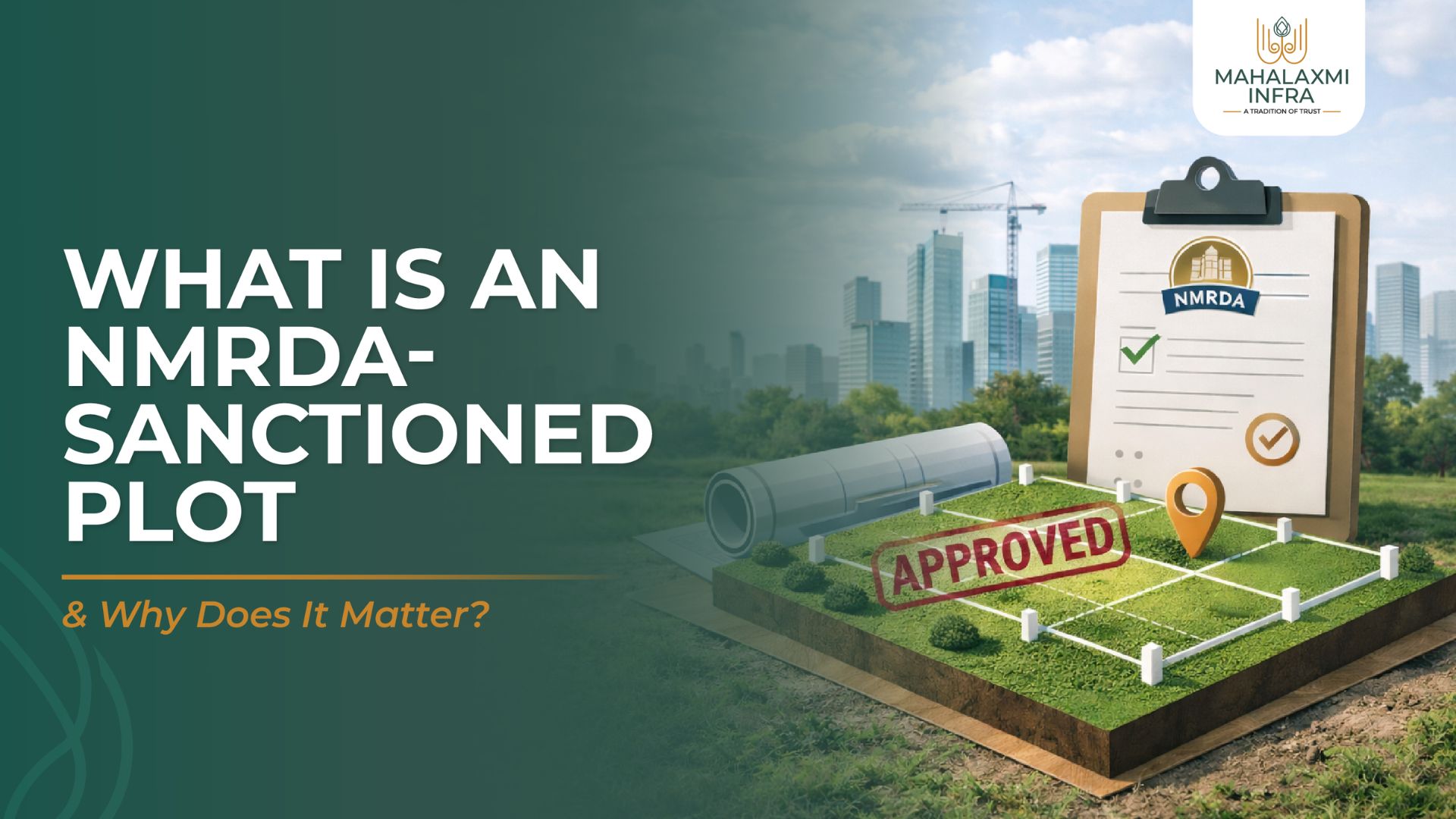
Buying a plot of land is one of the most significant financial decisions you will ever make. In Nagpur, the term NMRDA-sanctioned comes up in almost every real estate conversation - on brochures, at site visits, in advertisements. But very few buyers actually understand what it means, why it matters, and what happens if you buy a plot without this approval.
If you are planning to invest in land in or around Nagpur, this guide will give you everything you need to know about NMRDA sanctions - in plain language, without the jargons.
How to Check the NMRDA Sanctioned Layout List in Nagpur
Before purchasing a plot, buyers should verify that the layout has been sanctioned by the appropriate planning authority and that the particular plot forms part of the approved layout.
To begin verification, visit the official NMRDA Downloads page and look for the latest “List of Approved Layout in Metro Region” document. You can search the available list using details such as the layout name, developer’s name, mouza or village, khasra or survey number and sanction number.
Mahalaxmi Infra’s Ongoing Plotted Projects
Mahalaxmi Infra currently lists the following ongoing plotted developments as NIT/NMRDA-sanctioned layouts. Buyers can open the individual project pages to review the available project information:
You can also explore all ongoing and completed Mahalaxmi Infra projects in one place.
What Buyers Should Match During Verification
Finding a project or layout name in an approved-layout list is only the first step. Before paying a booking amount, match the following details with the sanctioned documents:
-
Name of the layout and developer
-
NMRDA or NIT sanction number and approval date
-
Mouza, khasra or survey number
-
Approved layout boundaries
-
Your exact plot number and its location within the layout
-
Road width, open spaces and public-utility areas
-
Release Letter status, wherever applicable
-
Details mentioned in the 7/12 Extract or Property Card
-
MahaRERA registration, wherever applicable
Important: A project page or marketing material should not be treated as final evidence of approval. Ask for the sanction letter, approved layout plan and applicable Release Letter, and independently cross-check them with NMRDA/NIT records or a qualified property lawyer before completing the transaction.
What is NMRDA?
NMRDA stands for Nagpur Metropolitan Region Development Authority. It is the statutory body responsible for planning and regulating the development of the Nagpur Metropolitan Region - which includes not just the city of Nagpur, but also surrounding talukas and villages that fall under its jurisdiction.
Think of NMRDA as the governing authority that controls how land in and around Nagpur is used, divided, and developed. Its primary job is to ensure that any new layout or construction follows specific planning norms - covering everything from road widths and open spaces to drainage systems and utility infrastructure.
The competent planning authority depends on the property’s location and jurisdiction. Where a layout carries NIT or NMRDA approval, buyers should verify the issuing authority, sanction number, approved plan and applicable conditions for the specific property.
What Does It Mean for a Plot to Be NMRDA-Sanctioned?
An NMRDA-sanctioned plot forms part of a layout approved by the Nagpur Metropolitan Region Development Authority. The sanctioned layout identifies features such as plot boundaries, roads, open spaces and public-utility areas, subject to the approval’s conditions.
Buyers should obtain the sanction letter and approved layout plan, then match the exact plot number, mouza, survey or khasra number and dimensions with the property being offered.
Layout sanction does not replace an independent title search or confirm that the property is free from every mortgage, ownership claim or dispute. Land-use permissions, applicable Release Letters, MahaRERA requirements and building permissions should also be checked separately.
Comparing layout approval status
A plot within an NMRDA-sanctioned layout has an identifiable planning approval that buyers can check against the property documents. However, title, encumbrances, infrastructure completion, loan eligibility and building permissions still require separate verification.
A plot without NMRDA sanction is not automatically illegal. It may fall under another competent authority or a different applicable approval framework. Buyers should establish which authority and permissions apply to that property.
Where required layout approval is missing or the plot falls outside the approved boundaries, there may be difficulties with construction permission, financing or resale. Obtain independent legal and technical advice before proceeding.
Why NMRDA sanction matters when evaluating a plot
Layout sanction provides a planning document against which buyers can check the property being offered. Its practical value depends on verifying the specific approval and its conditions.
1. Checking the approved layout
The sanctioned plan helps buyers compare the plot number, boundaries, roads and open spaces with the site. Ownership and the seller’s authority must be verified separately.
2. Assessing construction requirements
Buyers should confirm the permitted land use and obtain the applicable building permission before construction. Layout sanction does not automatically authorise a particular house or commercial building.
3. Understanding loan eligibility
Lenders may consider layout approval during their legal and technical assessment. Loan approval also depends on the property documents, valuation, applicant’s finances and the lender’s policies.
4. Verifying infrastructure commitments
Compare the approved layout and written development commitments with the work completed on site. Planned roads, drainage or utilities should not be described as completed or operational without verification.
5. Evaluating future value realistically
Layout approval is one factor buyers may consider when comparing properties. Future prices also depend on location, demand, access, development progress and market conditions. Appreciation and resale returns are not guaranteed.
How to Verify If a Plot is NMRDA-Sanctioned
Before you pay a single rupee, here is how to verify the sanction status of any plot:
1. Ask the developer for the Sanctioned Layout Plan number. This is a unique reference number issued by NMRDA or NIT.
2. Cross-check the layout plan number on the NMRDA or NIT official portals or by visiting their offices directly.
3. Verify that the specific plot you are purchasing is marked within the sanctioned layout boundary - not just adjacent to it.
4. Ask your legal advisor or lawyer to conduct a title search and verify the 7/12 extract (property register) for the land.
5. Check that the developer has not deviated from the sanctioned plan - particularly with regard to roads and open spaces.
| Pro Tip: A reputable developer will voluntarily share all sanctioned layout documents without you even asking. If a seller is reluctant or vague about providing these documents, treat it as a serious red flag. |
Why Mahalaxmi Group Only Works with NMRDA/NIT-Sanctioned Layouts
At Mahalaxmi Group, every single project we have ever delivered - across 67+ completed projects and 880+ acres of developed land in Nagpur - has been NIT or NMRDA sanctioned. This is not just a compliance requirement for us. It is a reflection of our founding commitment to transparency and ethical practice.
Our ongoing projects - Mahalaxmi Nagar 41 in Gumgaon, and Mahalaxmi Nagar 42 in Jamtha - all carry full NMRDA/NIT approvals. When you visit any of our sites, you can physically see and verify the sanctioned layout plan on display. You can also check the documents with our in-house legal team, who are always available to walk you through every paper related to your purchase.
We believe that informed buyers make the best long-term partners. When you understand what you are buying and why it is safe, your confidence in the investment grows - and so does our relationship.
If there is one thing to remember from this guide, let it be this: in Nagpur's real estate market, NMRDA/NIT sanction is not optional. It is the single most important marker of a legitimate, safe, and future-proof land investment.
Before you fall in love with any plot, ask for the sanctioned layout plan. Verify it. Then invest with confidence.
- Published by Mahalaxmi Group, Nagpur · mahalaxmiinfra.in
FAQs
1. What is the full form of NMRDA?
NMRDA stands for Nagpur Metropolitan Region Development Authority. It is the planning authority responsible for regulating development across the Nagpur Metropolitan Region, including areas outside the main municipal limits.
2. What does an NMRDA-sanctioned plot mean?
An NMRDA-sanctioned plot is located within a layout that has received planning approval from NMRDA. The sanctioned plan generally defines the approved plot boundaries, road widths, open spaces, public-utility areas and permitted land use.
However, layout sanction alone should not be treated as absolute proof of ownership. Buyers should separately verify the title, land records, encumbrances and seller’s authority.
3. How can I check whether a plot is NMRDA sanctioned?
Ask the developer or seller for the NMRDA sanction letter and sanctioned layout plan. Match the layout name, approval number, mouza, khasra or survey number and your exact plot number with the official records.
You can also read our detailed guide on how to check an NMRDA-approved plot in Nagpur.
4. Where can I find the NMRDA sanction layout list?
Visit the official NMRDA Downloads page and look for the latest document titled “List of Approved Layout in Metro Region.” Search the available document using the layout name, developer, mouza, village or survey details.
Because published lists may be updated periodically, buyers should also confirm the current approval status directly with NMRDA.
5. Is an NMRDA-sanctioned plot completely safe to buy?
NMRDA sanction is an important approval, but it does not replace complete legal due diligence. Buyers should also examine the ownership chain, sanctioned layout plan, Release Letter where applicable, 7/12 Extract or Property Card, NA order, Encumbrance Certificate, sale deed and MahaRERA details where registration applies.
Use this residential plot-buying checklist for Nagpur before paying any booking amount.
6. Is NMRDA approval proof of land ownership?
No. NMRDA approval primarily relates to planning and layout sanction. Ownership must be verified separately through the registered title documents, sale-deed chain, revenue records and other applicable property documents.
Learn more about the documents used to establish a clear-title property in Nagpur.
7. What is an RL plot in Nagpur?
RL commonly refers to a Release Letter associated with a sanctioned layout. Where plots or portions of a layout are subject to authority-related release conditions, buyers should verify that their exact plot is covered by the applicable Release Letter.
Do not rely only on the statement “RL plot.” Ask for the document and match the plot number, layout details and issuing authority.
8. Are NMRDA sanction and MahaRERA registration the same?
No. NMRDA sanction and MahaRERA registration serve different purposes. NMRDA sanction concerns planning and layout approval, while MahaRERA registration concerns project disclosures and regulatory compliance under the applicable real-estate law.
Depending on the project, both may need to be checked. One should not automatically be treated as a substitute for the other.
9. Can I construct a house on an NMRDA-sanctioned plot?
An NMRDA-sanctioned layout can make the plot eligible for residential development according to the approved land use. However, layout sanction does not mean construction can begin automatically.
The owner must obtain the applicable building permission and ensure that the proposed structure follows current development-control rules, setbacks, permissible FSI and other authority requirements.
10. Can I get a bank loan for an NMRDA-sanctioned plot?
An approved layout can support loan eligibility, but a bank loan is not guaranteed. The lender will independently evaluate the applicant’s income, credit profile, property valuation, title documents, sanction plan and other legal and technical records.
For a detailed explanation, read our guide to home loans for plot purchases in Nagpur.
11. What is an NMRDA part plan?
An NMRDA part plan provides planning information for a specific land parcel or area within the Nagpur Metropolitan Region. It may help identify zoning, reservations, proposed roads and surrounding land-use provisions.
A part plan is not the same as a sanctioned layout plan. Buyers should check both documents wherever applicable.
12. What is the difference between an NMRDA-sanctioned and a non-sanctioned plot?
An NMRDA-sanctioned plot forms part of a layout approved by the planning authority. A non-sanctioned plot may be outside an approved layout or may not comply with applicable planning requirements, creating potential problems with construction permission, financing, infrastructure or future resale.
See the detailed comparison of NMRDA-approved and non-approved plots.
13. Which land records should I check with the NMRDA sanction?
Depending on the property’s location and classification, buyers should check the latest 7/12 Extract or Property Card, mutation entries, registered sale deeds, Encumbrance Certificate, NA order and applicable tax records.
Our guide explains how to check and download the 7/12 Utara online in Maharashtra.
14. Does NMRDA sanction guarantee that the plot has no loan or dispute?
No. Layout sanction does not automatically confirm that the property is free from every mortgage, charge, ownership claim or legal dispute. Buyers should conduct an independent title search and review the Encumbrance Certificate and relevant land records.
Read more about the meaning and importance of an Encumbrance Certificate.
15. Where can I explore Mahalaxmi Infra’s plotted projects in Nagpur?
You can explore Mahalaxmi Infra’s ongoing and completed projects in Nagpur. Individual project pages provide information about the location, project highlights, amenities and available documentation.
Before selecting any plot, request the latest sanction letter, approved layout plan, applicable Release Letter and other supporting documents for independent verification.