Most people who buy a residential plot think of it as a simple transaction: you pick a piece of land, pay for it, register it, and it is yours. What they often do not see is the substantial work that transforms raw agricultural land into a legally approved, infrastructure-ready plot that you can actually build on without running into legal or practical problems a few years later.
Understanding what plot development means, and what a properly developed plot should look like, is essential knowledge for any buyer in a city like Nagpur where the plotted real estate market is large and the quality of layouts varies considerably from project to project.
Plot Development Meaning: A Quick Answer
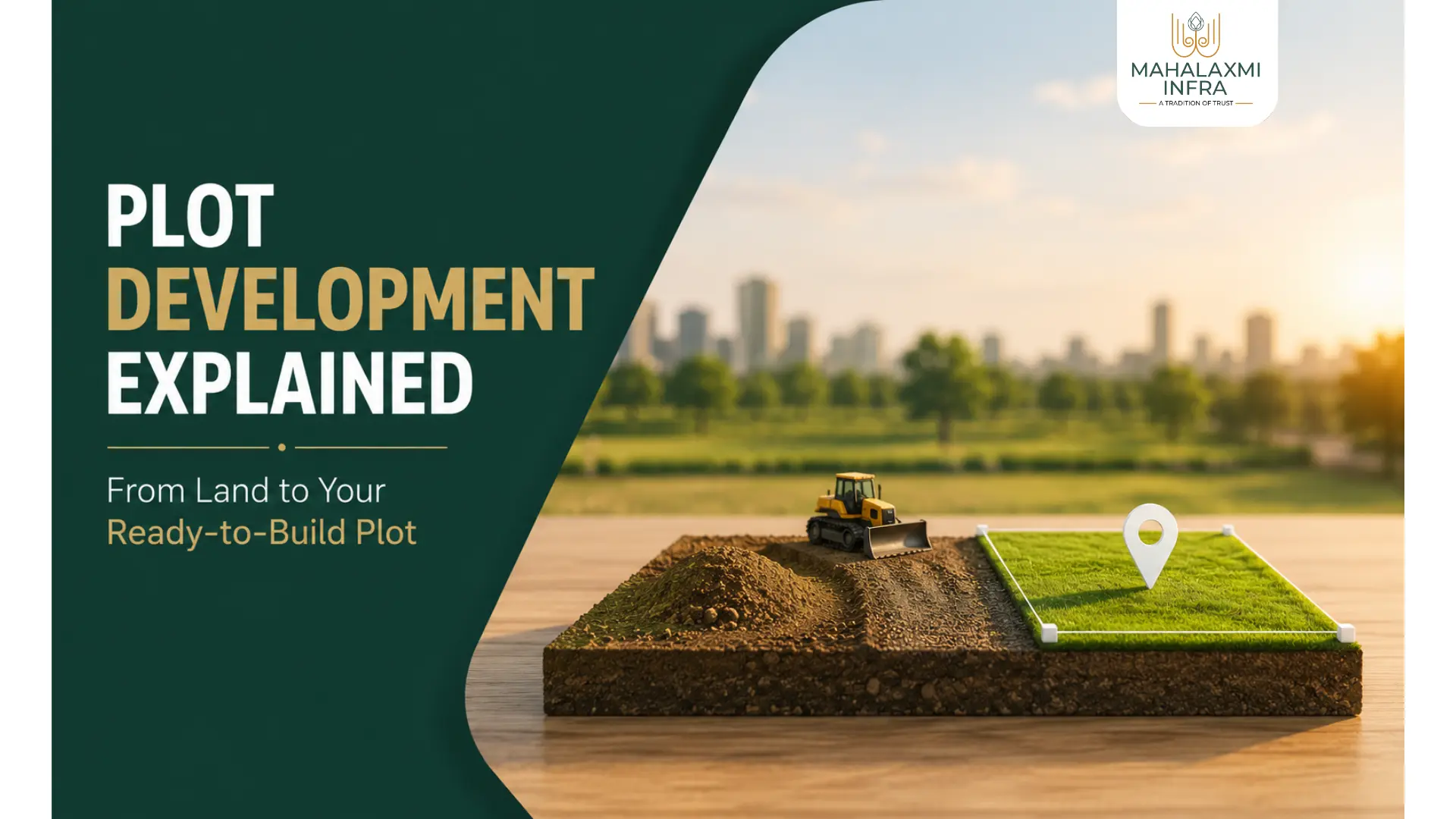
Plot development is the process of transforming raw or undeveloped land into a planned residential or commercial layout containing clearly identified plots, access roads, drainage, utilities and other required infrastructure.
Depending on the location and type of project, the process may include title verification, land acquisition, land-use or non-agricultural permission, layout sanction, MahaRERA registration and physical infrastructure development.
A developed plot is not simply an empty piece of land available for sale. Buyers should verify that the specific plot is included within the sanctioned layout and supported by the applicable ownership documents, land records and approvals.
Raw Land vs Developed Plot vs Ready-to-Build Plot
These terms are often used interchangeably in property advertisements, but they do not necessarily mean the same thing.
| Type of land | What it means | What buyers should verify |
|---|---|---|
| Raw or undeveloped land | Land where plot demarcation, layout approval or infrastructure development may not have been completed | Ownership, zoning, land classification and development permissions |
| Agricultural land | Land recorded for agricultural use in the applicable revenue records | Buyer eligibility, permitted use and whether land-use or NA conversion is required |
| Developed plot | A demarcated plot within a planned layout with applicable approvals and supporting infrastructure | Sanctioned layout plan, plot number, roads, drainage, utilities and project documents |
| Ready-to-build plot | A developed plot where construction may proceed after obtaining the applicable building permission | Land use, layout approval, building rules, setbacks, permissible FSI and construction permission |
Important: The words “developed” and “ready to build” should not be accepted only as marketing claims. Buyers should verify the relevant documents and obtain professional advice before making a payment.
The Stages of Plot Development
Plot development involves several legal, planning and physical-development stages. The exact procedure can vary depending on the location, land classification, project size and competent authority.
1. Land Identification and Initial Assessment
The developer identifies a suitable land parcel and studies its location, road access, surrounding development, zoning and suitability for the proposed residential or commercial use.
At this stage, the developer should determine whether the land is affected by reservations, proposed roads, acquisition notices, environmental restrictions or other planning limitations.
2. Title and Ownership Verification
Before acquiring the land, the developer reviews its ownership history and supporting records. This may include registered sale deeds, 7/12 Extracts, Property Cards, mutation entries, Encumbrance Certificates and other applicable documents.
Layout approval and clear ownership are separate matters. Even when a layout is sanctioned, buyers should independently verify the title and transaction history.
For more information, read our guide to understanding a clear-title property.
3. Land Acquisition or Development Rights
The developer purchases the land through registered documents or obtains valid development rights from the landowner. When multiple parcels or owners are involved, every relevant document and ownership interest should be properly verified.
Buyers should confirm that the developer has the legal authority to develop and sell plots within the project.
4. Land-Use and NA Permissions
Depending on the land’s classification, location and applicable planning rules, land-use or non-agricultural permission may be required before residential development.
Buyers should ask for the applicable land-use or NA order instead of relying on a verbal statement that the land has been converted.
5. Layout Approval
The developer prepares a proposed layout showing individual plots, internal roads, open spaces, public-utility areas and other planning provisions. This plan is submitted to the competent planning authority for approval.
In and around Nagpur, the appropriate authority may include NMRDA, NIT, NMC or another competent local body, depending on the project’s location and jurisdiction.
Learn more about what an NMRDA-sanctioned plot means and how buyers can verify the approval.
6. MahaRERA Registration
Plotted-development projects covered by the Real Estate (Regulation and Development) Act must be registered with MahaRERA before advertising or accepting bookings, unless a statutory exemption applies.
Buyers should search the project on the official MahaRERA website and compare the registration details, approvals, project plans, promoter information and completion commitments with the documents provided by the developer.
MahaRERA registration is important, but it does not replace independent title and document verification.
7. Infrastructure Development
Once the applicable permissions are in place, physical development can begin. Depending on the sanctioned plan and project commitments, this may include:
- Internal roads
- Storm-water drainage
- Sewage infrastructure
- Electricity distribution
- Water-supply provisions
- Plot demarcation
- Open spaces
- Public-utility areas
- Streetlights
- Entrance gates and fencing
- Landscaping and recreational facilities
Buyers should compare the infrastructure visible at the site with the sanctioned plan, agreement and promises made by the developer.
8. Plot Demarcation
Individual plots are marked on the ground and assigned plot numbers. The location, dimensions and boundaries of the selected plot should match the sanctioned layout plan and transaction documents.
Buyers should verify that the plot is not situated within a road, open space, public-utility area or land reserved for another purpose.
9. Agreement, Sale Deed and Registration
After the required verification and contractual process, the plot is transferred through the applicable registered documents.
A registered sale deed is a primary ownership document, but it should be considered alongside the seller’s title, land records, sanctioned layout, encumbrance status, possession and subsequent mutation entries.
10. Building Permission
Purchasing a plot within a sanctioned layout does not automatically permit immediate construction. The owner may still need to obtain building-plan approval and comply with applicable setbacks, height restrictions, permissible FSI and development-control regulations.
How to Develop a Plot of Land: What a Developer Actually Does
Buyers sometimes ask this from the perspective of a landowner who has inherited or purchased raw land and wants to understand how to convert it into a usable asset. The process for an individual landowner follows the same sequence above but with some practical differences.
An individual developing a small plot must still obtain NA conversion, apply for a building plan approval from the relevant local body, and ensure utility connections before construction begins. The challenge is that individual applicants do not have the economies of scale that an experienced developer brings to the approvals process, which is why many landowners prefer to partner with established developers rather than navigating the process alone.
For buyers, the more relevant question is not how to develop land but how to evaluate whether a developer has developed their land properly. That evaluation comes down to checking the documents described in the earlier stages.
What Is Plot Development in the Context of Nagpur?
Nagpur's real estate landscape has a mix of plotted projects at different stages of the development cycle, from fully developed and occupied layouts to projects that are mid-construction to pre-launch plots where land acquisition has been done but infrastructure is pending.
The city's growth corridors, including Wardha Road, Kamptee Road, Umred Road, and the Samruddhi Expressway belt, have seen significant plotted development activity over the past decade. Locations like Gumgaon, Jamtha, Hingna, and Beltarodi have attracted both developers and buyers because of their proximity to proposed infrastructure and relative affordability compared to core city areas.
The fastest-growing zones for real estate in Nagpur in 2026 are precisely those areas where active plot development is underway. However, not all plots in these zones are equally well-developed or legally clean.
What Separates a Well-Developed Plot from a Poor One
Not every plot that a developer markets as "developed" actually meets the standards a buyer should expect. Here is what separates a genuinely well-developed residential layout from one that merely looks the part.
| Parameter | Well-Developed Layout | Poorly Developed Layout |
|---|---|---|
| Approvals | NA conversion, layout approval, RERA registration all in place | One or more approvals missing or pending |
| Roads | Paved roads to approved width within the layout | Mud tracks or width less than approved plan |
| Drainage | Underground drainage or properly graded surface drainage | No drainage, waterlogging risk |
| Plot demarcation | Boundary markers, clear plot numbers, survey records matching | Vague boundaries, disputes possible |
| Title | Clear, freehold, no encumbrances | Disputed, leasehold, or with caveats |
| Developer track record | Multiple completed and delivered projects | First-time or unverifiable history |
Before you buy, go through the complete checklist for buying a plot in Nagpur and match each item against what the developer provides. The top documents to check before purchasing a plot guide on this site will walk you through exactly which papers to request and what to look for in each.
Plot Development and Long-Term Investment Value
A well-developed plot in the right location is among the strongest real estate investments available to an Indian buyer. Unlike an apartment, a plot gives you land that appreciates independently of any structure. Unlike agricultural land, a developed residential plot gives you the legal freedom to build when you are ready.
The comparison between a plot and a flat as investments frequently favours plots in well-chosen locations over the long term, given that land carries no maintenance fees and no risk of structural depreciation. Detailed comparisons of land vs gold and land vs mutual funds and fixed deposits available on this site make the investment case even clearer.
Founded in 2010, Mahalaxmi Infra has been developing residential plot layouts across Nagpur with all required approvals, physical infrastructure, and RERA compliance. Projects such as Mahalaxmi Nagar 45, Mahalaxmi Nagar 46, Mahalaxmi Nagar 47, and Mahalaxmi Nagar 52 are examples of layouts where the full development cycle has been followed rigorously. View the complete range of available and sold-out projects on the projects page.
Gated Community Plot Development: A Step Above
Beyond standard residential layouts, a growing segment of the Nagpur market is gated community plotted development. These are layouts where the developer goes further than the minimum infrastructure requirements to create a community with shared amenities, security, and a landscaped environment.
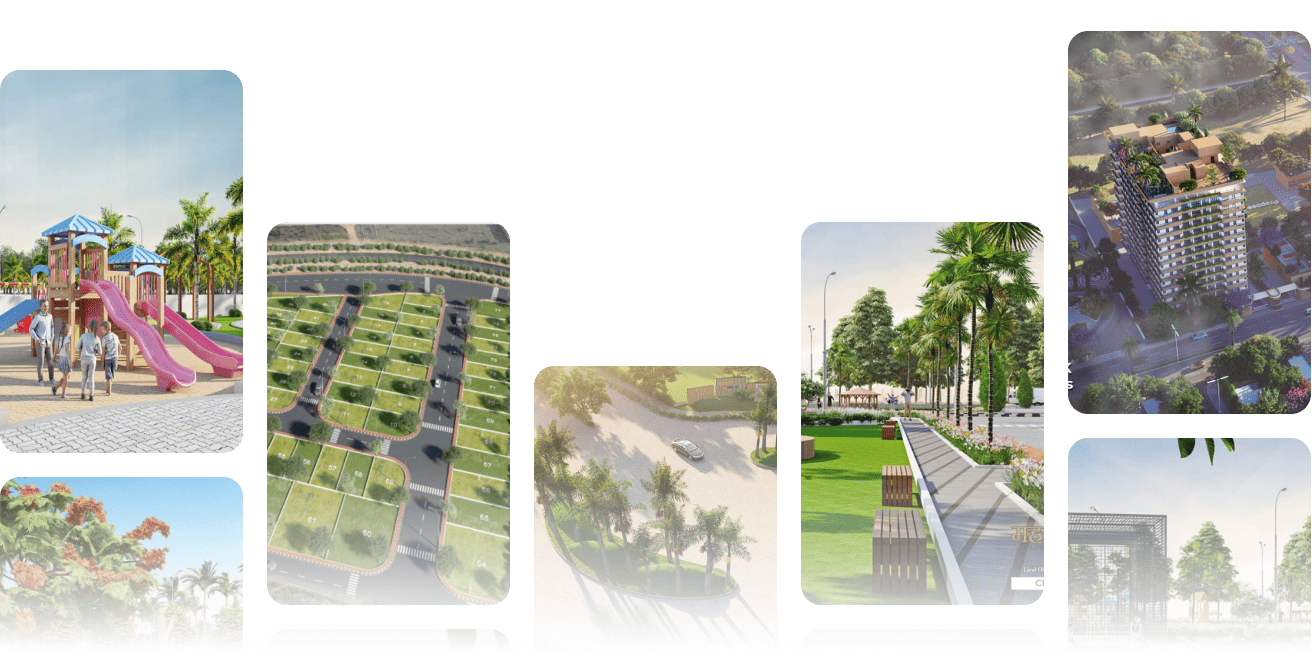
Gated community plots in Nagpur typically offer compound walls enclosing the entire project, 24-hour security at entry and exit points, internal roads of superior quality, landscaped parks and walking zones, and sometimes even clubhouse or recreational facilities. The premium for a gated community plot over an open layout plot is generally justified by the significantly higher resale demand and the quality of the living environment for those who build and reside in the project. Read more about gated community plots in Nagpur to understand what to expect and what to ask for.
Examples of Ongoing Plotted Developments by Mahalaxmi Infra
Buyers can compare the plot-development stages discussed above with Mahalaxmi Infra’s ongoing plotted projects:
- Mahalaxmi Nagar 49 – Sondapar
- Mahalaxmi Nagar 52 – Dhamna
- Mahalaxmi Nagar 47 – New Nanda
- Mahalaxmi Nagar 46 – Pandhurna–Umred Road
- Mahalaxmi Nagar 45 – Sumthana
- Mahalaxmi Nagar 44 – Tarodi
- Mahalaxmi Nagar 43 – Shankarpur
- Mahalaxmi Nagar 42 – Jamtha
- Mahalaxmi Nagar 41 – Gumgaon
- Mahalaxmi Nagar 31 – Pipla
You can also explore all ongoing and completed Mahalaxmi Infra projects.
Project availability, development status and documentation can change. Buyers should request the latest sanction letter, approved layout plan, applicable Release Letter, MahaRERA information and plot-specific documents before making a decision.
FAQs
1. What is plot development in real estate?
Plot development is the process of converting raw or undeveloped land into a planned residential or commercial layout. It generally involves ownership verification, applicable permissions, layout planning, infrastructure development and division of the land into identifiable plots.
2. What is plotted development?
Plotted development is a real-estate project in which a larger land parcel is planned and divided into individual plots. The developer may also provide internal roads, drainage, electricity infrastructure, open spaces, gardens and other amenities according to the sanctioned plan and project commitments.
3. What is the difference between a plot and a developed plot?
A plot is simply an identified piece of land. A developed plot generally forms part of a planned layout and has defined boundaries, legal access, applicable approvals and supporting infrastructure.
Buyers should verify these features rather than relying only on the word “developed” in an advertisement.
4. What does a ready-to-build plot mean?
A ready-to-build plot generally means that the land is suitable to be considered for construction under the applicable planning and building rules. However, the owner may still need separate building-plan permission before starting construction.
5. What are the main stages of plot development?
The main stages generally include land identification, title verification, acquisition or development rights, land-use permission, layout sanction, MahaRERA registration where applicable, infrastructure development, plot demarcation, sale registration and building permission.
The exact process depends on the location, land classification and competent authority.
6. Which approvals should I check before buying a developed plot?
Depending on the property, buyers may need to verify the land-use or NA order, layout sanction, approved layout plan, applicable Release Letter, MahaRERA registration, building-related conditions and other authority permissions.
These should be reviewed along with the title documents, 7/12 Extract or Property Card and Encumbrance Certificate.
7. Is every developed plot registered with MahaRERA?
Not necessarily. MahaRERA registration depends on whether the project falls within the applicable legal requirements or qualifies for an exemption.
Buyers should search the official MahaRERA portal and obtain professional guidance instead of assuming that every plotted development must appear there.
8. Is it safe to buy a plot in an under-development layout?
It may be considered after carefully checking the developer’s ownership or development rights, layout approval, MahaRERA registration where applicable, project disclosures, development schedule, payment terms and delivery commitments.
MahaRERA registration is important but does not replace independent legal verification.
9. How can I confirm that my plot is inside the sanctioned layout?
Obtain the approved layout plan and identify the exact plot number, dimensions and location. Match it with the sanction letter, transaction documents and physical demarcation at the site.
Ensure that the plot does not overlap with an internal road, open space, public-utility area or land outside the sanctioned boundary.
10. Can I construct immediately after purchasing a developed plot?
Not automatically. Construction may require a sanctioned building plan and compliance with applicable setbacks, FSI, height, access and development-control rules.
Confirm the requirements with the competent authority before starting construction.
11. What infrastructure should a developed residential layout have?
Depending on the sanctioned plan and project commitments, a developed layout may include internal roads, drainage, electricity provisions, water infrastructure, streetlights, plot demarcation, open spaces and public-utility areas.
Gated layouts may additionally offer security, fencing, landscaping, gardens and recreational facilities.
12. Does a developed plot automatically qualify for a bank loan?
No. A developed or sanctioned layout can support loan eligibility, but the lender will independently evaluate the applicant, title, approval documents, property valuation and other legal and technical factors.
Read our guide to home loans for plot purchases in Nagpur.
13. Does a registered sale deed guarantee a clear title?
A registered sale deed is an important ownership document, but registration alone does not guarantee that the property is free from every title defect, prior claim, mortgage or dispute.
Buyers should examine the complete ownership chain, land records, Encumbrance Certificate, possession and applicable approvals.
14. What are the most important land plotting rules?
The land use must permit the development, the layout should be approved by the competent authority, roads and open spaces must follow the sanctioned plan, and individual plots should have clear dimensions, boundaries and legal access.
The exact rules vary according to the authority, location and type of development.
15. How long does residential plot development take?
There is no standard timeline for every project. The duration depends on the land size, ownership structure, approvals, infrastructure scope, authority procedures and project conditions.
Buyers should check the project-specific completion schedule and MahaRERA disclosures where applicable.