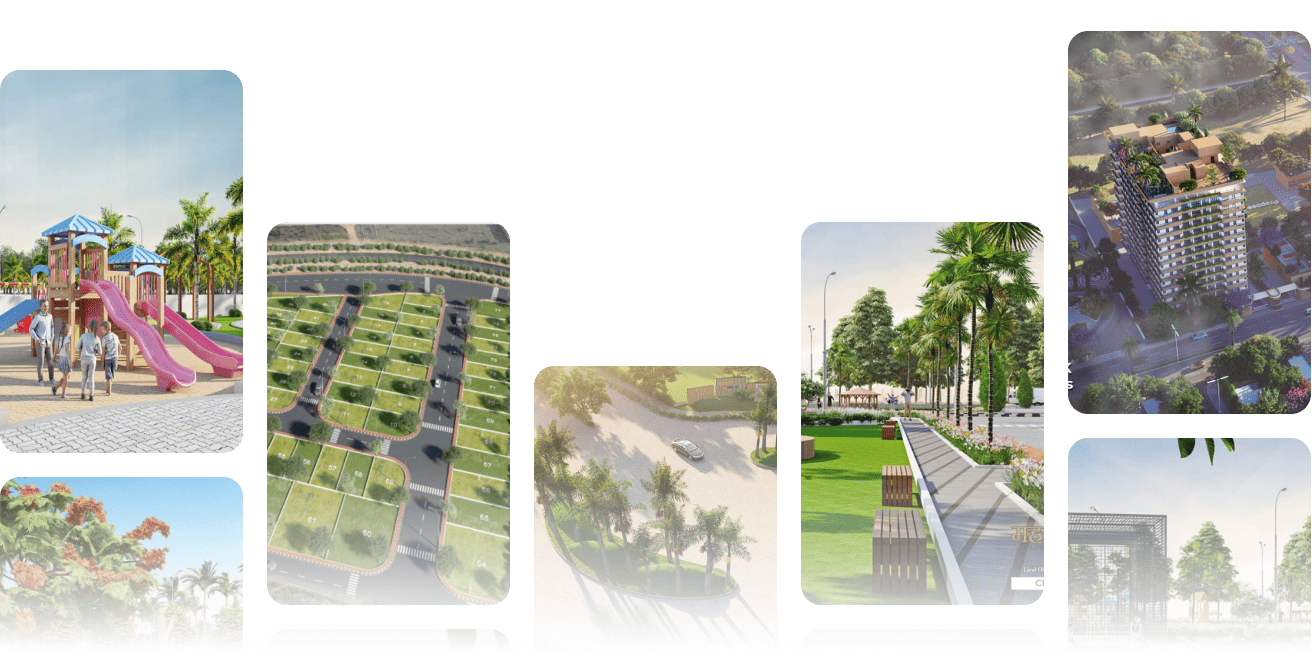
Every city you see around you, the residential colonies, the commercial complexes, the plotted layouts on the outskirts, none of it happened by accident. Behind every developed property is a structured process that transforms raw land or an old building into something functional and valuable. Yet for most first-time buyers and investors in India, the term "real estate development" remains vague, misunderstood, or completely unknown. If you have ever wondered how a barren piece of land near Nagpur's Ring Road suddenly becomes a gated community worth crores, this guide is for you.
In this blog, you will get a complete, beginner-friendly understanding of real estate development in India. You will learn what it actually means, who is involved, what the stages look like, and why understanding this process can make you a smarter property buyer or investor. Real estate development is not just a phrase. It is a living, multi-crore industry that shapes how cities like Nagpur, Pune, and Hyderabad grow every decade.
Whether you are a first-generation property buyer, a salaried professional exploring land investment, or someone simply trying to understand how the industry works, this guide draws from real scenarios in the Indian market. This includes Nagpur's rapidly evolving infrastructure corridors like Samruddhi Mahamarg, MIHAN, and the Outer Ring Road, to give you a grounded, trustworthy picture of how real estate development actually functions on the ground.
Quick Overview
- Definition: Real estate development is the process of purchasing land or existing property, improving it through construction or infrastructure, and selling or leasing it for profit or use
- Key Benefit: Understanding this process helps buyers and investors make smarter, risk-aware decisions
- Who It Is For: First-time homebuyers, plot investors, NRIs exploring Indian property, and anyone entering the real estate market
- Why It Matters in 2026: With Nagpur emerging as a Tier-2 powerhouse and India's infrastructure boom accelerating, real estate development is at the center of wealth creation for millions of Indian families
What is Real Estate Development, Really?
Real estate development is far more than just constructing buildings. At its core, it is the complete process of transforming land or property from its raw or underutilized state into a finished product that serves a residential, commercial, or industrial purpose.
In India, this process includes:
- Identifying land with growth potential
- Acquiring the land legally through title verification and sale deed
- Getting approvals from local authorities including RERA and municipal bodies
- Designing the layout, infrastructure, and construction plan
- Marketing and selling plots, flats, or commercial units
- Handing over to buyers with proper documentation
Think of it this way. When you buy a plot in a township near Nagpur's Butibori or Wardha Road, that plot did not always exist as a ready-to-register asset. A developer identified that agricultural land, converted it legally, planned the layout, got RERA approval, built internal roads and drainage, and then offered it to you as a sale-ready plot. That entire journey is real estate development.
Types of Real Estate Development in India
Understanding the different types helps buyers know exactly what kind of project they are dealing with and what to expect from it.
1. Residential Development
This is the most common type in India. It includes:
- Plotted developments: Gated plot communities with roads, drainage, and boundary walls
- Apartment complexes: Multi-story housing projects registered under RERA
- Villas and row houses: Premium residential clusters
- Affordable housing: Government-supported or budget segment projects
In Nagpur, residential development has seen significant growth along corridors like Wardha Road, Kamptee Road, and areas near the Samruddhi Expressway access points.
2. Commercial Development
This includes office spaces, retail shops, malls, IT parks, and business centers. MIHAN, which stands for Multi-modal International Hub Airport Nagpur, is one of the largest commercial development zones in central India, attracting national and international businesses.
3. Industrial Development
This covers warehouses, logistics parks, manufacturing zones, and SEZs (Special Economic Zones). Nagpur's Butibori MIDC is a prime example of industrial real estate development fueling regional employment and economic growth.
4. Mixed-Use Development
This is a combination of residential, commercial, and retail spaces within a single project. It is common in urban redevelopment zones across Indian metros and is now increasingly seen in Tier-2 cities like Nagpur.
5. Plotted Layout Development
This is particularly relevant in Nagpur and the surrounding Vidarbha region. It involves converting agricultural land into RERA-approved plot layouts, which are then sold to individual buyers. This is among the most accessible forms of real estate investment for salaried and self-employed buyers in the region.
The 6 Key Stages of Real Estate Development
This is the heart of the process and understanding each stage makes you a far more informed buyer.
Stage 1: Land Identification and Feasibility
The developer surveys land for:
- Location advantage such as proximity to highways, airports, and growth corridors
- Market demand to assess whether a buyer base exists in that area
- Legal status to check whether it is agricultural, NA, or already a residential zone
- Price versus potential return on investment
In Nagpur, developers have been identifying land near the Samruddhi Mahamarg entry points and Outer Ring Road for the last 5 to 7 years, anticipating the infrastructure growth that is now driving prices upward.
Stage 2: Legal Due Diligence and Land Acquisition
Before purchasing, a developer must verify:
- 7/12 extract: The land ownership record in Maharashtra
- NA (Non-Agricultural) conversion status: Whether the land has been legally converted for non-agricultural use
- Clear title: No disputes, mortgages, or encumbrances on the property
- Zone classification: Whether it is classified as residential, commercial, or industrial as per the Development Plan
Stage 3: Approvals and RERA Registration
This stage involves the most paperwork and it protects buyers the most. Approvals required in Maharashtra include:
- Layout approval from the local municipal body or gram panchayat
- RERA registration which is mandatory for projects above a certain size
- Environmental clearance for large-scale projects
- NA permission from the district collector's office
Without RERA registration, no developer can legally advertise or take bookings. Always verify a project's RERA number on the MahaRERA portal before investing.
Stage 4: Infrastructure Development
Once approvals are in place, the physical development begins:
- Internal roads and pathways
- Boundary wall and security gate
- Drainage and water supply lines
- Electrical connection points
- Landscaping and common areas
This is what separates a raw plot from a developed plot and it directly impacts the price per square foot.
Stage 5: Marketing and Sales
Developers launch the project to the public through site visits, digital marketing, brokers, and walk-in inquiries. Pricing is typically lower during pre-launch and rises as infrastructure is completed and inventory reduces.
Stage 6: Handover and Registration
The final stage involves:
- Executing the sale deed
- Registering the property at the Sub-Registrar Office
- Handing over possession with all NOCs and completion documents
A trustworthy developer ensures every document is in order at this stage, from the index II to the encumbrance certificate.
Key Players in Real Estate Development
| Role | Who They Are | What They Do |
| Developer / Promoter | Private company or builder | Buys land, develops, and sells the project |
| Architect | Licensed professional | Designs layout, buildings, and infrastructure |
| Civil Contractor | Construction firm | Executes physical construction work |
| Legal Advisor | Property lawyer | Handles title, deeds, and compliance |
| RERA Authority | Government body | Regulates and protects buyer interests |
| Broker / Channel Partner | Sales agent | Connects buyers to projects |
| Buyer | Individual or investor | Purchases plot, flat, or commercial unit |
Why Real Estate Development Matters for Property Buyers in India
Understanding real estate development is not just academic. It has direct, practical value for anyone considering a property purchase.
You Can Identify Quality Projects
When you understand the development stages, you know what questions to ask:
- Is the NA conversion done?
- Is RERA registration complete?
- Are internal roads finished or still planned?
You Can Assess Price Justification
A plot priced higher because internal roads, drainage, and boundary walls are complete is genuinely worth more than raw land. Knowing this prevents you from comparing two very different products at the same price point.
You Reduce Risk Significantly
Most property fraud in India targets buyers who do not understand the development process. Knowing what approvals are mandatory and what documents to verify protects your investment from the start.
Real Estate Development in Nagpur: Why the City is a 2026 Hotspot
Nagpur is no longer just central India's orange capital. It has become one of India's most strategically positioned real estate markets, driven by several key factors:
- Samruddhi Mahamarg: Connecting Nagpur to Mumbai and opening up land along the 701 km corridor
- MIHAN SEZ: One of Asia's largest multi-modal logistics and aviation hubs
- Outer Ring Road: Creating new residential and commercial development zones around the city
- Smart City Mission: Improving urban infrastructure across Nagpur systematically
- Zero Mile advantage: Nagpur's geographical position at the center of India makes it critical for logistics and industrial development
Developers like Mahalaxmi Infra have been working within this ecosystem, developing RERA-approved plotted layouts in strategic locations around Nagpur, ensuring buyers get legally clear, infrastructure-ready plots at competitive prices.
Common Misconceptions About Real Estate Development in India
"All plotted projects are the same"
This is not true. The quality of a plotted development depends entirely on the stage of development, the approvals in place, and the infrastructure delivered. Always compare like for like before making a decision.
"RERA approval means the project is complete"
RERA registration means the project is legally registered and the developer is accountable. It does not mean construction or infrastructure is finished. Always check the expected completion date on the MahaRERA portal.
"Agricultural land is cheap and safe to buy directly"
Agricultural land without NA conversion cannot be legally used for residential purposes and cannot be registered as a plot for non-agricultural buyers. Due diligence is non-negotiable in every case.
"A bigger developer means no risk"
Size does not guarantee safety. Always verify documents regardless of brand reputation or project scale.
Key Takeaways Before You Invest
Real estate development is the engine behind every property you will ever buy. Understanding how it works is the single most powerful advantage you can give yourself as a buyer or investor in India.
To summarize what you have learned in this guide:
- Real estate development is a multi-stage process from land identification to buyer handover
- There are five major types: residential, commercial, industrial, mixed-use, and plotted layout
- Legal due diligence and RERA registration are non-negotiable checkpoints for every buyer
- Nagpur's infrastructure growth makes it one of the most opportunity-rich real estate markets in central India in 2026
- Knowing the development stages helps you assess price, quality, and risk before committing your money
If you are exploring plotted investments in Nagpur, Mahalaxmi Infra offers RERA-registered, infrastructure-ready layouts in high-growth corridors, built with transparency and long-term buyer value in mind. Reach out to the team for a site visit or a no-obligation consultation before making your decision.
FAQ Section
Q1. What is real estate development in simple terms? Real estate development is the process of buying land or an existing property, improving it through construction or infrastructure, and making it available for sale or use. It includes everything from land identification to final registration.
Q2. Is real estate development a good investment in India in 2026? Yes, particularly in growth corridors of Tier-2 cities like Nagpur, Pune, and Indore. With infrastructure projects like Samruddhi Mahamarg and MIHAN driving demand, well-located developed plots offer strong appreciation potential with relatively lower entry costs compared to metros.
Q3. What is the difference between a developer and a builder in India? A developer identifies land, gets approvals, plans the project, and oversees sales. A builder or contractor physically constructs the structures. In many cases, the same company plays both roles, but they are technically distinct functions.
Q4. Is RERA registration mandatory for plotted developments in Maharashtra? Yes. Any plotted layout project covering more than 500 square meters or involving more than 8 plots must be registered with MahaRERA before any marketing or bookings can begin legally.
Q5. How do I check if a real estate project in Nagpur is RERA approved? Visit the official MahaRERA portal at maharera.mahaonline.gov.in, search by project name or developer name, and verify the registration number, project details, and expected completion date.
Q6. What should a first-time buyer check before investing in a developed plot? Verify the 7/12 extract, NA conversion order, RERA registration, layout approval from the competent authority, and the developer's track record. Always engage a property lawyer for independent title verification.
This blog is intended for educational purposes. Always consult a qualified legal and financial advisor before making any real estate investment decision.