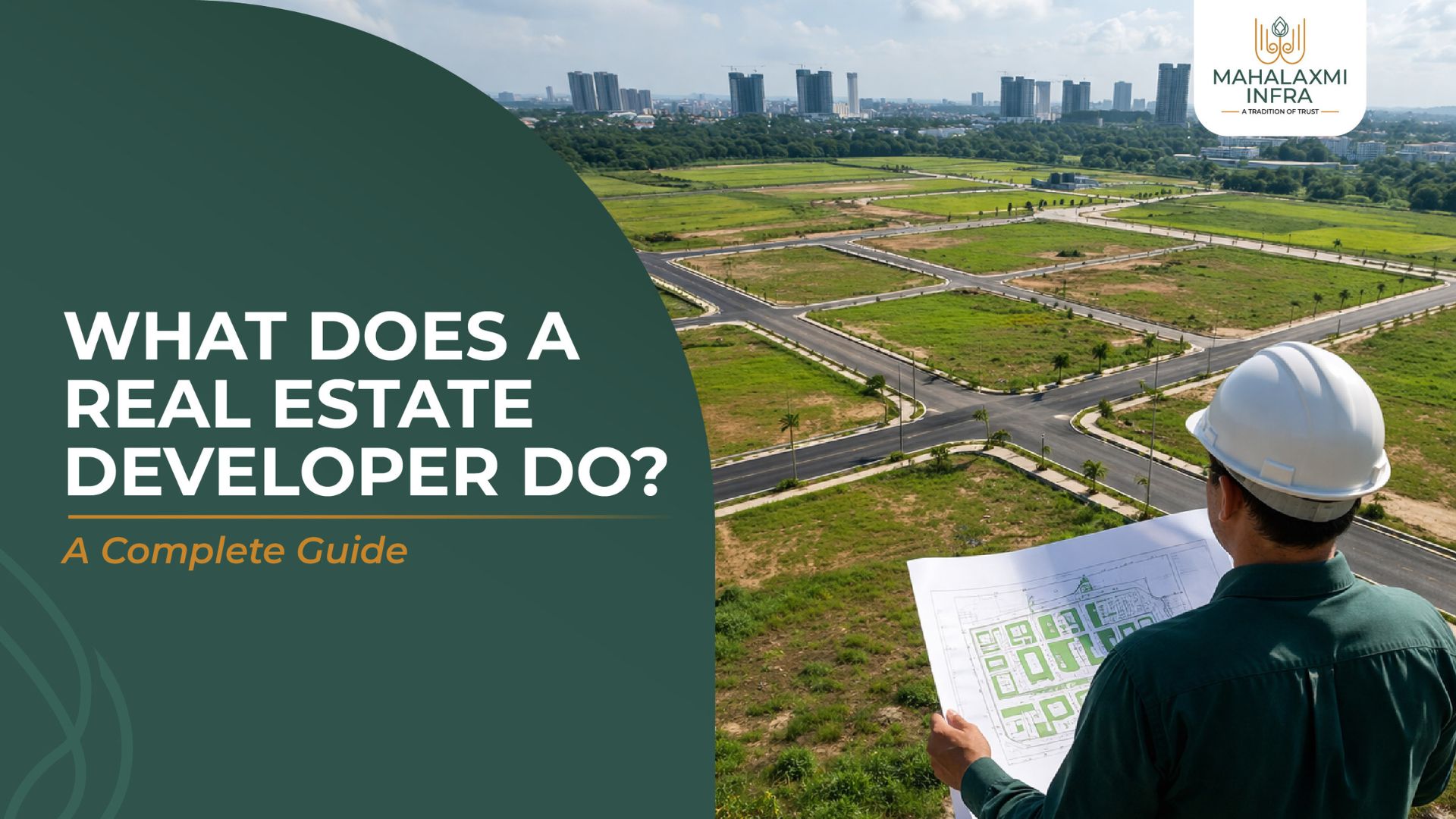
When you buy a plot or a flat in Nagpur, you are essentially trusting one person with your life savings: the real estate developer. Yet most buyers in India know very little about who a developer actually is, what they do day to day, and how they make money from a project. This lack of understanding often leads to poor decisions and avoidable financial risk.
This blog breaks down exactly what a real estate developer does, what responsibilities they carry, and how their profit model works in the Indian context. Understanding this will help you evaluate any developer or project with far greater confidence before signing anything.
From land acquisition in Vidarbha to launching RERA-registered plot schemes near Nagpur's growth corridors, the role of a developer is far more complex and layered than most buyers realize.
Quick Overview
-
Definition: A real estate developer is a person or company that buys land, develops it into a usable property, and sells or leases it for profit
-
Key Benefit: Understanding a developer's role helps buyers evaluate project quality and developer credibility
-
Who It Is For: First-time buyers, plot investors, and anyone considering a property purchase in India
-
Why It Matters in 2026: With Nagpur's rapid growth, knowing how developers operate helps you separate trustworthy projects from risky ones
Who Exactly is a Real Estate Developer?
A real estate developer is the central figure behind any property project. They are the one who spots an opportunity in a piece of land, arranges the capital, gets the approvals, builds the infrastructure, and finally sells the finished product to buyers.
In India, developers can be:
-
Individual promoters: Small-scale developers working in specific cities or districts
-
Private limited companies: Mid-size firms registered under the Companies Act
-
Large real estate corporations: Listed companies with national-level projects
-
Cooperative housing societies: Member-driven development entities
In the Nagpur market, most plotted layout developments are handled by regional developers who understand local land records, Vidarbha-specific regulations, and the city's growth plan.
Core Roles and Responsibilities of a Real Estate Developer
1. Land Identification and Acquisition
The developer's first job is finding the right land. This involves:
-
Scouting locations with growth potential such as highway-facing land or areas near infrastructure projects
-
Checking land records including 7/12 extract and ownership history
-
Negotiating and purchasing the land from the original owner
-
Ensuring the title is clear and dispute-free before proceeding
In Nagpur, developers have been actively acquiring land near the Samruddhi Mahamarg corridor and the Outer Ring Road, knowing these zones will see strong price appreciation in the coming years.
2. Legal Compliance and Approvals
This is one of the most critical responsibilities. The developer must:
-
Get NA (Non-Agricultural) conversion from the district collector
-
Apply for layout approval from the local planning authority
-
Register the project under RERA before marketing or taking bookings
-
Obtain environmental clearances for larger projects
-
Ensure the project complies with the city's Development Plan
Without these approvals in place, the project has no legal standing and puts buyers at serious risk.
3. Project Planning and Design
Once land is acquired and approvals are in process, the developer works with architects and planners to:
-
Design the internal layout including roads, plot sizes, and open spaces
-
Plan utility infrastructure such as drainage, water lines, and electricity
-
Decide on amenities based on the target buyer profile
-
Ensure the design meets municipal and RERA requirements
4. Financing and Capital Management
Developing a project requires significant capital, and managing it is a core developer responsibility. Funding typically comes from:
-
Developer's own equity
-
Bank loans and construction finance
-
Early buyer bookings and installments
-
Private investors or joint venture partners
Poor capital management is one of the most common reasons projects get delayed in India. A financially sound developer keeps construction moving regardless of slow sales phases.
5. Construction and Infrastructure Delivery
For plotted developments, this includes:
-
Building internal CC roads
-
Laying drainage and water supply lines
-
Constructing boundary walls and entry gates
-
Setting up streetlights and landscaping
-
Completing common area development
The quality and timeline of infrastructure delivery is the clearest signal of a developer's reliability.
6. Sales and Marketing
The developer is responsible for:
-
Setting the right price per square foot based on location and development cost
-
Launching the project through digital marketing, site visits, and broker networks
-
Ensuring all marketing material reflects accurate RERA-registered details
-
Managing customer inquiries and converting them into bookings
7. Buyer Handover and Documentation
The final responsibility is delivering what was promised:
-
Executing registered sale deeds for each buyer
-
Handing over possession with all completion documents
-
Providing NOCs from relevant authorities
-
Resolving any post-possession disputes or deficiencies
A developer's reputation is ultimately built or broken at this stage.
How Does a Real Estate Developer Make Profit?
This is the question most buyers are curious about but rarely get a clear answer to. Here is how the developer profit model works in India.
|
Revenue and Cost Component |
Details |
|
Land Cost |
20 to 40 percent of total project cost depending on location |
|
Approvals and Legal |
5 to 10 percent of project cost |
|
Infrastructure and Construction |
25 to 35 percent of project cost |
|
Marketing and Sales |
5 to 10 percent of project cost |
|
Total Sales Revenue |
Price per sq ft multiplied by total saleable area |
|
Developer Profit Margin |
Typically 15 to 30 percent of total revenue in plotted projects |
The profit comes from the difference between the total cost of development and the total revenue earned from sales. Developers who buy land early in a growth corridor and sell after infrastructure is built earn significantly higher margins because land prices appreciate during the development phase.
In Nagpur, developers who acquired land near Butibori or Wardha Road five to seven years ago are now seeing substantial returns as infrastructure catches up with those locations.
The Difference Between a Developer, Builder, and Promoter
These three terms are often used interchangeably in India but they carry different meanings.
|
Term |
Meaning |
|
Developer |
Conceptualizes, plans, and executes the entire project from land to sale |
|
Builder |
Focuses on construction only; may work under a developer |
|
Promoter |
Legal term used under RERA; refers to the entity responsible for the project |
Under RERA, the promoter is legally accountable to buyers for project delivery, quality, and timelines. In most cases, the developer and promoter are the same entity.
What Makes a Good Real Estate Developer in India?
Before you invest with any developer, evaluate them on these parameters:
-
RERA registration: Every project must be listed on MahaRERA with updated progress reports
-
Track record: How many projects have they delivered and on time
-
Legal clarity: Are land titles and approvals complete before launch
-
Infrastructure quality: Visit completed projects to assess road and utility quality
-
Transparency: Do they share all documents willingly and clearly
Developers like Mahalaxmi Infra build their credibility on exactly these parameters, offering buyers RERA-registered, legally clear plotted layouts in Nagpur's high-growth zones with full document transparency.
Red Flags to Watch Out For
-
Developer asks for bookings before RERA registration is done
-
Vague answers about NA conversion or layout approval status
-
No physical office or verifiable address
-
Promises of unrealistic returns or appreciation guarantees
-
Pressure to book immediately without proper site visits
What This Means for Property Buyers
A real estate developer is not just someone who sells you land or a flat. They are the single entity responsible for turning a legal, financial, and physical vision into a property you can register, live in, or invest in.
Key points to carry forward:
-
A good developer handles land, law, design, construction, and handover as a complete system
-
Their profit model is tied to delivering quality because reputation drives future sales
-
RERA registration and legal transparency are your two strongest filters when choosing a developer
-
In Nagpur's fast-growing market, choosing the right developer is as important as choosing the right location
If you are looking for a developer in Nagpur who combines legal compliance, infrastructure quality, and transparent dealings, Mahalaxmi Infra is worth exploring. Connect with the team for a site visit and project walkthrough before making any commitment.
FAQ Section
Q1. What is the main role of a real estate developer? A real estate developer identifies land, gets legal approvals, builds infrastructure, and sells the finished property to buyers. They manage the entire process from raw land to registered sale.
Q2. How does a real estate developer make money in India? A developer earns profit from the difference between the total cost of land, approvals, infrastructure, and marketing versus the total revenue earned from selling plots or flats. Profit margins in plotted projects typically range from 15 to 30 percent.
Q3. Is a developer the same as a builder in India? Not exactly. A developer manages the entire project including land, approvals, and sales. A builder focuses specifically on construction. In many projects, the same company handles both roles.
Q4. What is a promoter under RERA? Under the RERA Act, a promoter is the legal entity responsible for delivering the project to buyers. This includes the developer, landowner, or any party who sells units in a registered project.
Q5. How do I check if a developer is trustworthy in Nagpur? Check their MahaRERA registration, visit past completed projects, verify land title documents independently, and speak to existing buyers about their experience before committing.
Q6. Can a developer sell plots before getting all approvals? No. Under RERA, a developer cannot advertise or accept bookings for a project until it is registered with the relevant RERA authority. Any developer doing so is operating illegally.
This blog is intended for educational purposes. Always consult a qualified legal and financial advisor before making any real estate investment decision.